
[IR3] International Relations in the framework of Realism
In the nature of man, we find three causes of quarrel: competition, diffidence, glory. The first maketh men invade for gain; the second, for safety; third, for reputation - T.Hobbes (Leviathan, 1651)

In the previous post, we discussed basics of International Relations (IR), various actors involved, key concepts, power structures, major theoretical frameworks and Levels of analysis. Continuing with the discussion, in this and the next few posts we will present major theories in each of the frameworks discussed in the earlier post starting with the framework of Realism.
Recall that Realism is a dominant theoretical framework in international politics that perceives the global system as an inherently anarchic and competitive arena where states are the primary actors. It emphasizes the centrality of states' interests, security, and power in shaping international relations.
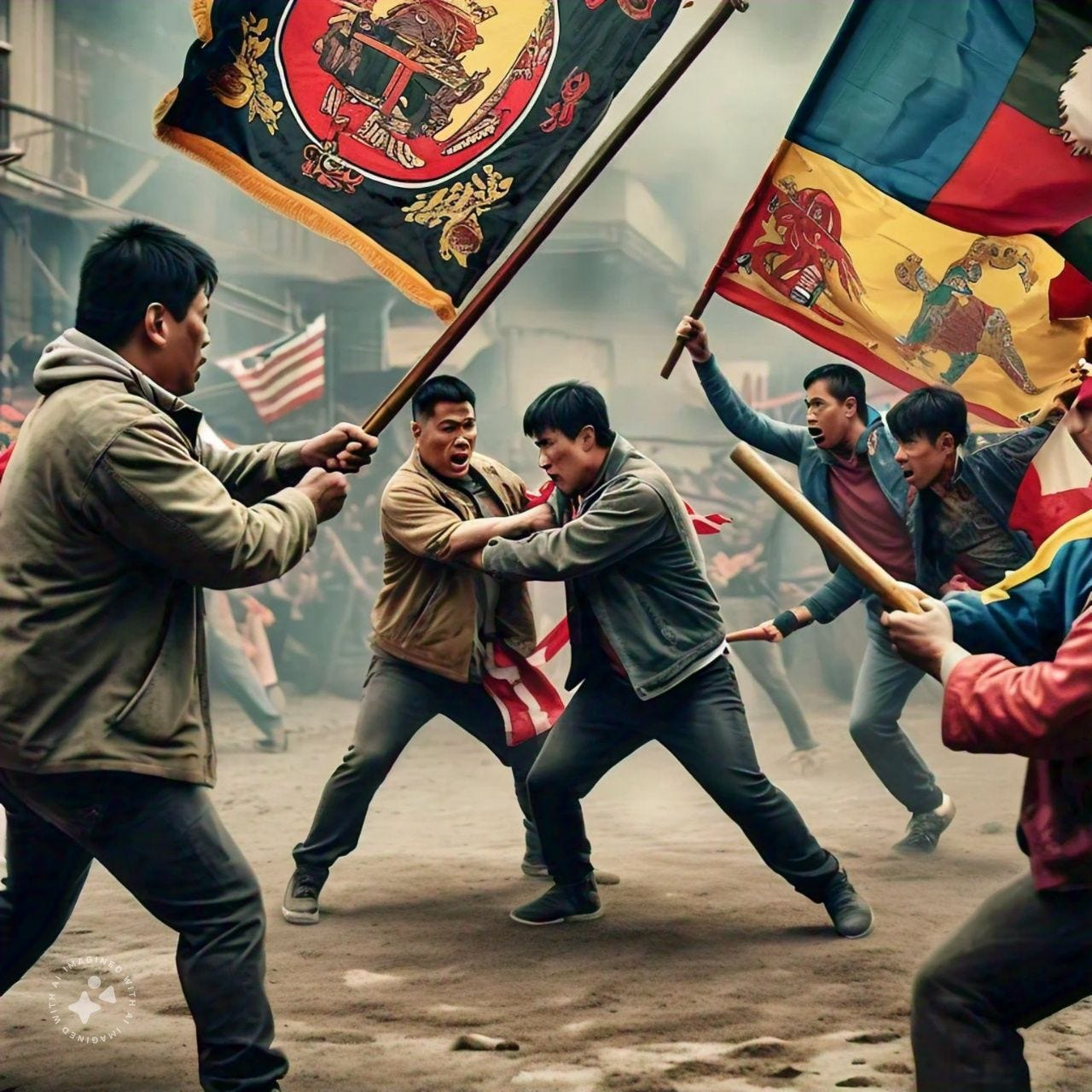
Some of the dominant theories in Realism framework are:
Classical realism: Classical realism is a school of thought that emerged following World War II. It builds on the ideas of political philosophers such as Thucydides, Machiavelli, Hobbes and Hans Morgenthau. Classical Realism centers on human nature as the primary driver of a state’s behavior. It proposes that the desire for power and the propensity for conflict are rooted in the inherent selfishness, aggression, and lust for power of human beings. Classical Realism sees international politics as a reflection of human nature, which is viewed as inherently conflictual and power-seeking. States act aggressively and pursue power because leaders, as human beings, are driven by these fundamental characteristics. While acknowledging the role of power, Classical Realism often engages with moral and ethical questions, emphasizing the tragic nature of politics and the tension between morality and the pursuit of power.
Neorealism (also known as Structural Realism): This is an updated version of classical realism which acknowledges the core foundations of classical realism while addressing its limitations in international relations. Neorealism shifts the focus from human nature to the structure of the international system. It argues that the anarchic nature of the international system (i.e., the lack of a central authority) compels states to act in ways that maximize their security and power. The international system is anarchic, meaning there is no overarching authority to enforce rules or protect states, leading to a self-help system. States are seen as rational actors that prioritize survival and act in their national interest, driven by the need to ensure their security. The behavior of states is largely determined by the distribution of power in the international system (e.g., unipolarity, bipolarity, multipolarity), rather than by human nature. Neorealism explains state behavior as a response to the pressures of the international system's structure. States seek to maintain or increase their power to ensure survival in an anarchic world, where the distribution of power dictates the dynamics of international relations. This theory was proposed by Kenneth Waltz. Two popular variant of Structural Realism which are worth mentioning are:
Offensive Realism: Offensive Realism, a sub-theory of Realism, argues that states are inherently aggressive and constantly seek to maximize their power and security, often through expansionist policies. The pursuit of power is driven by the anarchic nature of the international system. States must pursue power aggressively to ensure their survival, leading to competition and conflict.
Defensive Realism: In contrast to Offensive Realism, Defensive Realism argues that states are primarily security seekers rather than power maximizers. States aim to maintain the status quo and avoid unnecessary conflict, balancing only when their security is threatened. Excessive pursuit of power can be counterproductive, as it may provoke counterbalancing coalitions. A related concept in this theory is Security Dilemma, which refers to a state's efforts to increase its security (e.g., through military buildup) is perceived as a threat by others, leading to an arms race or increased tension, even though the initial intent was defensive. In other words, actions taken by a state to increase its security can inadvertently lead to greater insecurity for all, potentially escalating to conflict.
Neoclassical Realism: This theory incorporates both international-systemic factors and domestic-level factors to explain state behavior. Like Neorealism, this theory accepts the importance of the international system's anarchic structure but argues that how states respond to this environment is heavily influenced by domestic factors. These include political leadership, domestic institutions, national identity, public opinion, and state’s capacity. The theory places significant emphasis on how state leaders perceive threats and opportunities, which can lead to different policy outcomes even under similar systemic pressures. Neoclassical Realism explains state behavior as a product of both external pressures (from the international system) and internal dynamics (domestic politics and leadership). It argues that states' actions are not purely dictated by systemic factors but are also shaped by internal processes that determine how states interpret and respond to external threats. Key political proponents of this theory are Gideon Rose (who coined the term), Randall Schweller, and Fareed Zakaria.
Balance of Power: This theory posits that international stability is maintained when power is distributed relatively equally among states or coalitions of states. When one state or group of states becomes too powerful, others will balance against it to prevent dominance. States act to prevent any one state from achieving hegemony, often through alliances or military buildup.
Hegemonic Stability Theory (in Realist framework): Proposed by Charles Kindleberger, this theory suggests that international order is more likely to be stable when a single state (the hegemon) dominates the international system. The hegemon provides public goods, such as security and open markets, which help maintain order. Stability is achieved when one state has the preponderance of power to enforce rules and norms, but the decline of a hegemon can lead to instability.
In summary, we can illustrate these theories using an analogy. Envision a vast, untamed wilderness where survival is uncertain, and every creature must fight for resources. Classical Realism portrays this savage world, attributing the struggle for power to the inherent nature of its inhabitants. Neorealism, however, argues that the unforgiving environment itself drives this power struggle. Neoclassical Realism agrees but suggests that understanding the internal dynamics of these creatures is equally important. Amidst the chaos, Balance of Power and Hegemonic Stability theories emerge, striving to explain how a delicate equilibrium can be achieved in this unforgiving wilderness.
In the next post, we will discuss other two theoretical frameworks i.e. Idealism (Liberalism) and Constructivism.
PS: We would love to hear your thoughts on this series of articles on International Relations and other posts. Please feel free to share your comments or send us an email at admin@mineglobal.org. Additionally, we encourage you to invite others to join us on this journey of intellectual empowerment.
Lastly, don’t forget to check our daily short notes on Liberal sciences at (and subscribe us at):
https://mineglobal.substack.com/notes , OR,
https://www.facebook.com/profile.php?id=61562130750360, OR,
https://x.com/MINEGlobalLearn
Thank you for your coverage MINE.
It’s great to know you’re there.